How it works
From procurement to deployment, in three steps.
No lengthy implementation, no fiber line, no electrical permit. We can get departure boards installed within two weeks of signature.
Data integration
Boards ingest your existing GTFS-Realtime feed directly. Departures and per-stop map tiles are rendered server-side; no integration work on the agency side.
Pole installation
We strap the boards to existing stop poles. Each board connects via cellular on power-up, fetches its configuration, and displays the appropriate data with quick refreshes every 60 seconds.
Central management
We give you a dashboard to manage your fleet of signs centrally. Check the health of the network, push out service updates to any departure board, and view rider feedback for each deployment.
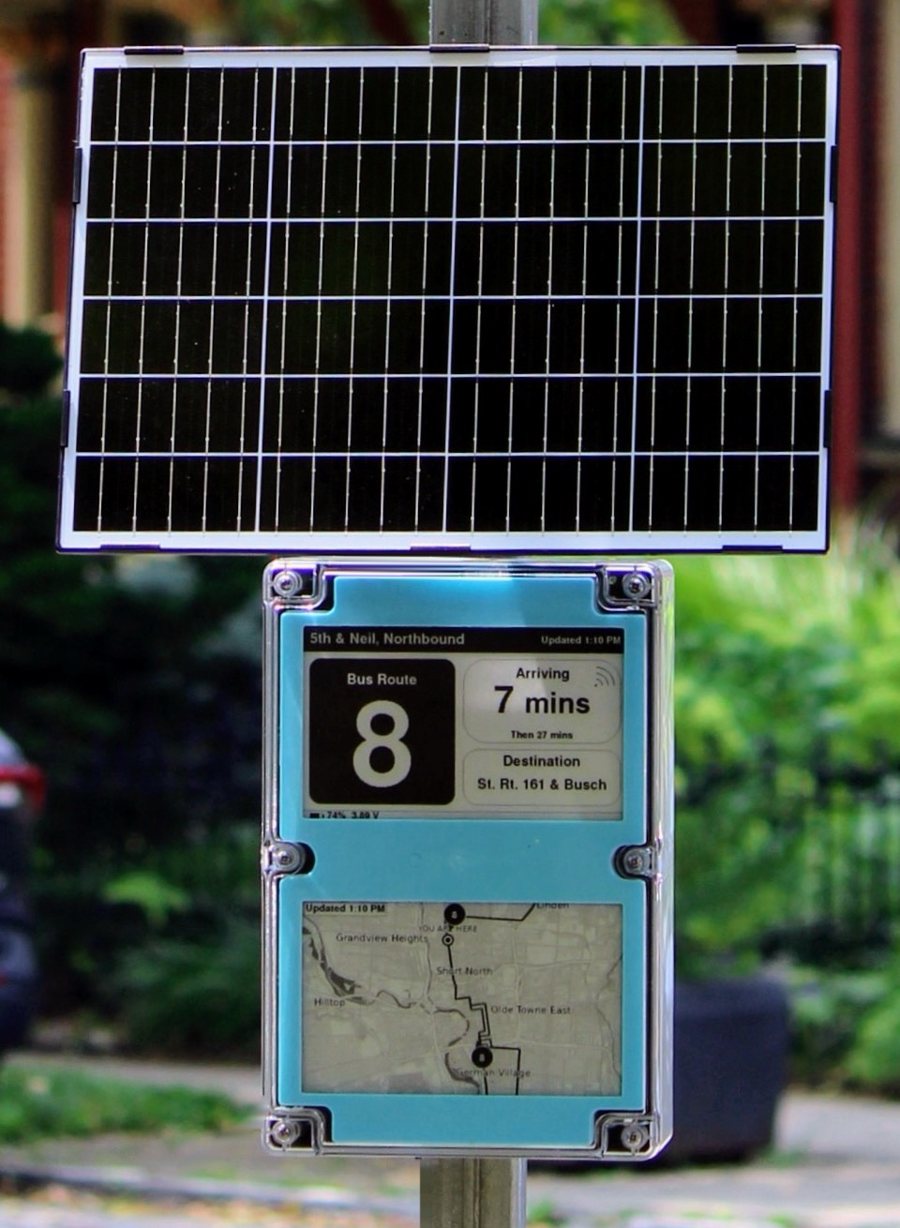
On the pole
What a rider sees at the stop.
- Stop and direction
- Every board names its stop and direction of travel, with the time of the last update.
- Next bus, and the one after
- Route number, minutes to arrival, and the following trip, so riders know whether to wait or walk.
- Where it's going
- The trip's destination, written the way your timetables write it.
- Route map
- The route drawn on a map with the rider's stop marked, so the trip makes sense at a glance.
- Power that takes care of itself
- A small solar panel above the board keeps the battery charged, and the battery level shows in the corner of the screen.